Manual.ly Logo

Moldex Series 9000 EasyLock Manual

0,0 · 0 Avaliações

Manual em PDF · 44 Páginas

Português

M: QW-35-FL
página

/ 44

Loading...
4059dcbd114d49994f910f96f037830bf142 page 5
3
GB – Instructions for Series 9000 Masks
Important Information for Users
This manual is only valid in conjunction with the instruction manual for Moldex Series
7000/9000 gas and particulate filters. Failure to comply with these instructions on
how to use the product and failure to wear the respiratory protection in the polluted
area may negatively impact on the health of the user and lead to permanent damage
and life-threatening injuries.
• This breathing apparatus does not supply oxygen (02) • Only use the product in ad
-
equately ventilated areas,(19.5 Vol.-% oxygen) • The mask and filters must be selected
in accordance with the pollutant type and concentration (see Table 2). • In the case
of gases with insufficient warning properties, filters may only be used if special usage
policies are specified for this purpose. • If the conditions are uncertain or changeable,
self-contained breathing apparatus must be worn. • You must exit the working area
and replace the respirator mask immediately if: – the mask is damaged, – you expe
-
rience difficulty in breathing, – you experience dizziness or fatigue. – you can taste
or smell hazardous substances or if you experience irritation • Read the instruction
manual before using the mask. • The product does not contain any metallic parts that
could cause ignition in potentially explosive atmospheres. • If you have any questions
about how to use the product, please contact Moldex-Metric. • You must also observe
the relevant rules and regulations when using respiratory equipment. • Under certain
circumstances, persons with beards, long sideburns or other anomalies in the area
around the sealing lines may be unable to achieve a proper sealing fit. Spectacle
frames that extend under the sealing line will impede a proper sealing fit. • The masks
must not be modified in any way. • Users of the masks and filters must be familiar with
how to handle them correctly. • When not in use, the mask and filter must be stored in
an uncontaminated environment.
Caution: Do not use filter equipment in unventilated containers and confined spaces.
Preparations Before Using the Full-mask
The full-mask must always be checked before use. Do not use a damaged or defective
mask. Seek the immediate assistance of a supervisor.
You must check • The mask and the filters for fractures, deformations, cracks and
contamination. • Whether the head strap is torn, nicked or damaged in any other way
and whether it provides sufficient elasticity. • The inhalation and exhalation valves
as well as the sealing rings on the filter connections for contamination, deformation,
fractures and cracks. Make sure that the valves and sealing rings are fitted correctly. •
The use-by-date of the filter and their correct fitting in accordance with the instruction
manual for gas and particulate filters. Fitting/removing the full-mask (Figures 1, 2, 3
and 4) Open the straps fully at the 4 adjustment points and hold the head strap with
one hand at the bracing with the Moldex lettering. Place the opening of the head strap
at the back of the neck and pull the mask down over your face from above. At this point,
make sure that no hairs are trapped between the sealing lip and your face. Position
the mask on your face and use one hand to press the mask firmly against your mouth
and chin. Now use your other hand to pull the neck strap tight on one side and then
repeat the procedure on the other side. To ensure the best possible seal between mask
and face, you should always tighten the neck straps first. The head strap must lie flat
on your head. To ensure that the mask fits comfortably, adjust the head and neck strap
equally. Before entering your working area, check that the mask creates a seal around
the face. To remove the mask, first loosen the clips on the neck strap by pulling the mask
away from your face. Using suction to check the face seal (Figure 5) Place the palm
of your hand over the opening on the filter cover to seal it and breathe in slowly. If the
facepiece contracts slightly, the mask is correctly seated. If you notice an inflow of air,
adjust the position of the mask on your face or adjust the tension of the straps. Repeat
this check until a seal is achieved. Using excess pressure to check the face seal (Figure
6) For full-masks equipped with an EN 148-1 connection, check the face seal before
fitting the filter to the facepiece. Place the palm of your hand over the exhalation valve
and breathe out slowly. If no air escapes between the facepiece and your face, a prop
-
er sealing fit is achieved. If you notice air escaping, adjust the position of the mask on
your face or adjust the tension of the straps. Repeat this check until a seal is achieved.
Under no circumstances should you enter a hazardous area if you are unable to
achieve a proper sealing fit. Seek the assistance of a supervisor.
Maintaining the Full-mask
The maintenance intervals as set out in the national regulations must be adhered to.
The date of manufacture is shown on the inside of the face seal in the chin area.
Cleaning/Disinfection We recommend cleaning the mask after each use. If not in use,
clean the mask after 6 months at the latest. Remove the filter; clean the facepiece
with warm water (max. 50°C). If necessary, use a neutral cleaning agent and an
alcohol-based disinfectant. To clean the valve membrane, remove it from the holder.
To clean the inner mask, unfasten it from the two stop points. To refit it, use the guide
rails on the lower part of the lens and the two stop points. To dismantle the filter, refer
to the instruction manual for gas and particulate filters. After having cleaned or disin
-
fected the mask, the face seal needs to be checked by means of suitable leak testing
equipment. Before cleaning pull the protective film away from the lens Dry the mask
thoroughly before putting on a new protective film and before storing it. Storage Keep
the 9000 mask sealed in a dry, uncontaminated environment. Protect against sunlight
and sources of heat (see the "Storage" icons). The name of the wearer and a record
of the filter changes can be noted on the packaging. Caution: At low temperatures,
moisture can cause the valves to freeze up. The date of manufacture is engraved on
the inside of the mask. Calendar clocks see page 39. Exhalation Valve (Spare Part
No. 9974 [b]) Fold down the cover of the exhalation valve and check the exhalation
valve and valve seat for contamination, deformation, fractures or cracks. Replace the
valve membrane when necessary, or every 4 years at the latest. Please note date of
replacement. Inhalation Valve (Spare Part No. 9974 [a]) Check the inhalation valve
on the inner mask and on the inside of the filter connection for contamination, defor
-

Converse com o manual do seu Moldex Series 9000 EasyLock através de IA

Obtenha respostas instantâneas de IA a partir do manual do seu Moldex Series 9000 EasyLock

Pergunte qualquer coisa sobre o Moldex Series 9000 EasyLock. As respostas vêm deste manual, com as páginas nas quais se baseiam.

Series 9000 EasyLock Cronograma de manutencao

Lembre-me quando a manutencao for necessaria
A cada 6 meses
Limpar a máscara não utilizada

Se não estiver em uso, limpe a máscara pelo menos a cada 6 meses para garantir higiene e funcionalidade.

Mostrar no manual (pagina 5)
A cada 4 anos
Substituir a membrana da válvula de exalação

Substitua a membrana da válvula de exalação quando necessário, ou no máximo a cada 4 anos. Registe a data da substituição.

Mostrar no manual (pagina 5)
Após cada utilização
Limpar e desinfectar a máscara

Remova os filtros e limpe a peça facial com água morna (máx. 50°C). Utilize um detergente neutro/desinfectante à base de álcool se necessário. Verifique a vedação após a limpeza.

Mostrar no manual (pagina 5)
Antes de cada utilização
Inspecionar a máscara e as válvulas

Verifique a máscara, os filtros, as tiras de cabeça, as válvulas de inalação/exalação e os anéis de vedação quanto a danos, contaminação ou deformação antes de usar.

Mostrar no manual (pagina 5)

Lembretes de manutencao gratuitos

De acordo com a data de compra. Sempre gratuito, cancele a subscricao quando quiser.

Ao enviar, concorda com a politica de privacidade. Cancele a subscricao com um clique em qualquer e-mail.
M: qwen/qwen3.8-flash

Faça uma Pergunta

0/1000

Você recomenda Series 9000 EasyLock?

Sim Não

Perguntas Frequentes

A

Nao, este aparelho respiratorio nao fornece oxigenio. É estritamente para uso em areas com ventilacao adequada contendo pelo menos 19,5% de volume de oxigenio.

Esta resposta foi útil?

A

Recomenda-se limpar a mascara apos cada uso. Se nao for usada, deve ser limpa pelo menos a cada seis meses para evitar o acúmulo de contaminacao.

Esta resposta foi útil?

A

Armações de óculos que se estendem sob a linha de vedacao impedirão um ajuste de vedacao adequado. Você pode usar o suporte de óculos opcional, mas certifique-se de que a armação nao quebre o selo.

Esta resposta foi útil?

A

Você deve sair da area de trabalho imediatamente e substituir a mascara do respirador. Sentir cheiro ou sabor de substancias perigosas indica uma falha no selo ou saturacao do filtro.

Esta resposta foi útil?

A

Sim, o produto nao contém nenhuma parte metalica que possa causar ignicao em atmosferas potencialmente explosivas, tornando-o seguro para tais ambientes.

Esta resposta foi útil?

A

Realize uma verificacao de vedacao colocando a mao sobre a abertura do filtro e inspirando lentamente. Se a mascara contrair levemente, o selo está correto. Alternativamente, cubra a valvula de exalacao e expire suavemente para verificar vazamentos.

Esta resposta foi útil?

M: QW-35-FL

Vantagens e Desvantagens

Vantagens

  • Cumpre o padrao EN 136:1998 CL2 para protecao respiratoria de alto nivel
  • Sistema de correia da cabeca EasyLock permite ajuste rapido e preciso
  • Compativel com uma ampla gama de filtros particulados P1, P2, P3 e filtros de classe gas
  • Nenhuma parte metalica reduz riscos de ignicao em atmosferas potencialmente explosivas
  • Lente de policarbonato de visao clara com integracao opcional de suporte de óculos
VS

Desvantagens

  • Requer aderencia estrita aos cronogramas de manutencao para garantir durabilidade
  • Barbas ou pelos faciais podem impedir a obtencao de um ajuste de vedacao adequado
  • Braços de óculos que se estendem sob a linha de vedacao podem comprometer o selo
  • Valvulas podem congelar se expostas a baixas temperaturas com umidade presente
  • A selecao do filtro deve corresponder especificamente a tipos e concentracoes de poluentes com precisao
M: QW-35-FL

Produto Especificação

Recursos

Vlvula, escudo facial, arreio de quatro pontos, ajustvel, filtro substituvel

M: QW-35-FL

Produto Descrição

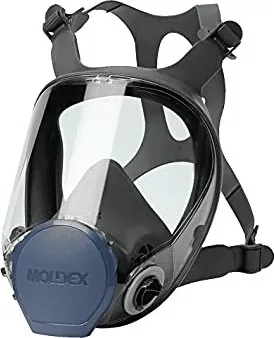
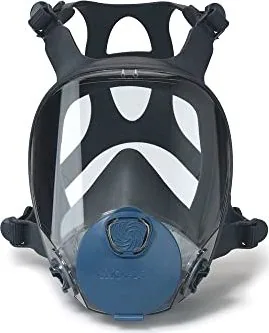
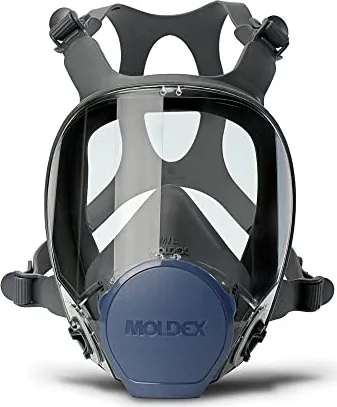
Proteja Seus Pulmões com o Respirador Mascara Facial Completa Moldex Series 9000 EasyLock

O Respirador Mascara Facial Completa Moldex Series 9000 EasyLock destaca-se como um ponto alto de equipamentos de protecao pessoal projetados para ambientes industriais exigentes. Esta mascara robusta de rosto inteiro oferece protecao abrangente contra uma ampla variedade de substancias nocivas, incluindo gases toxicos, vapores e materia particulada. Projetado para atender ao rigoroso padrao EN 136:1998 CL2, garante que os usuarios estejam protegidos de contaminantes que ameaçam a vida enquanto mantem o conforto durante o uso prolongado.

Uma das caracteristicas mais destacadas deste respirador é seu sistema EasyLock inovador, que simplifica o processo de colocar e tirar a mascara. As correias da cabeca apresentam quatro pontos de ajuste, permitindo um ajuste personalizado que se adapta a varias formas de rosto. O encaixe adequado é critico; a mascara deve criar um selo hermético ao redor da boca e do queixo sem prender cabelos ou interferir nas armações dos óculos. Os usuarios sao aconselhados a realizar verificacoes de pressao negativa e positiva antes de entrar em qualquer area contaminada para verificar a integridade do selo.

A manutencao e a higiene são fundamentais ao usar protecao respiratoria. O manual recomenda limpar a peça facial apos cada uso com agua morna que nao exceda 50 graus Celsius. Para uma sanitacao mais profunda, agentes de limpeza neutros e desinfetantes à base de alcool podem ser empregados. É crucial remover o filtro, limpar os componentes internos da mascara e inspecionar as valvulas quanto a detritos ou danos antes do armazenamento. A mascara deve sempre ser mantida em um ambiente seco e nao contaminado, longe da luz solar direta e fontes de calor para evitar a degradacao do material.

Versatilidade é outro aspecto chave da Serie 9000. Ela suporta varios filtros que variam de filtros particulados P1 que oferecem 4 vezes o Limite de Exposicao no Local de Trabalho (WEL) até filtros de gas Classe 2 que fornecem ate 20 vezes o WEL ou 5000 ppm. Modelos especificos como o 9004, 9005 e 9006 utilizam a conexao EN 148-1 para fixacao padronizada do filtro. Seja voce trabalhando em processamento quimico, agricultura ou resposta a emergencias, este respirador fornece a confiabilidade necessaria para proteger sua saude.

Notas Importantes de Manutencao

Sempre substitua o diafragma da valvula de exalacao pelo menos a cada quatro anos. Certifique-se de inspecionar regularmente a cupula nasal e as correias da cabeca quanto ao desgaste. Se a mascara mostrar sinais de rachaduras, deformacao ou contaminacao, descarte-a imediatamente. Nunca modifique a estrutura da mascara, pois isso anula as garantias e compromete a seguranca.

M: QW-35-FL

© Copyright 2026 Manual.ly
