
HiKOKI UV3628DA Manual
Manual em PDF · 248 Páginas
Português



Verificação rápida
Resposta incorreta, tente novamente.
Converse com o manual do seu HiKOKI UV3628DA através de IA
Obtenha respostas instantâneas de IA a partir do manual do seu HiKOKI UV3628DA
Pergunte qualquer coisa sobre o HiKOKI UV3628DA. As respostas vêm deste manual, com as páginas nas quais se baseiam.
UV3628DA Cronograma de manutencao
Inspecione regularmente todos os parafusos de montagem para garantir que estejam devidamente apertados. Aperte imediatamente se algum estiver solto para prevenir riscos.
Ocasionalmente, verifique antes, durante e após a operação que cavacos e poeira não se acumularam nos terminais da ferramenta e da bateria.
Limpe o corpo da ferramenta com um pano embebido em solução de sabão para remover concreto. Remova imediatamente qualquer concreto aderido ao conjunto flexível.
Faça uma Pergunta
Você recomenda UV3628DA?
Sim NãoPerguntas Frequentes
E utilizado para compactar betao fresco em fundacoes e produtos de betao. A vibracao ajuda a remover o ar retido e promove uma mistura de betao mais homogenea.
Esta resposta foi útil?
Possui o modo Normal a 12.000 vibracoes por minuto para compactacao geral e areas de cofragem sensiveis. O modo Potencia atinge 15.200 vibracoes por minuto para betao de alta viscosidade.
Esta resposta foi útil?
O UV3628DA foi concebido para baterias HiKOKI Multi Volt, incluindo BSL36A18 e BSL36B18. As baterias existentes BSL3660, BSL3620, BSL3626 e BSL18xx nao sao compativeis.
Esta resposta foi útil?
Insira a agulha verticalmente, evite o contacto com armaduras de aco e cofragem, e mova-a entre pontos sobrepostos. Retire-a lentamente apos a compactacao para evitar a formacao de buracos.
Esta resposta foi útil?
Liberte o gatilho e verifique se existe sobrecarga ou sobreaquecimento. Elimine a causa da sobrecarga ou deixe a ferramenta e a bateria arrefecerem completamente antes de reiniciar.
Esta resposta foi útil?
Desligue a ferramenta, remova a bateria e limpe o betao com um pano humedecido numa solucao de sabao suave. Nao lave o corpo da ferramenta com agua nem utilize solventes que possam danificar as pecas de plastico.
Esta resposta foi útil?
Vantagens e Desvantagens
Vantagens

- O design sem fio de 36 V melhora a mobilidade em fundacoes, cofragens e trabalhos com produtos de betao.
- Dois modos fornecem 12.000 ou 15.200 vibracoes por minuto para betao normal e de alta viscosidade.
- Uma agulha vibratoria de 28 mm e uma area efetiva de compactacao de 280 mm permitem uma consolidacao sistematica do betao.
- A protecao contra sobrecarga e temperatura, as luzes de aviso e os indicadores de bateria permitem uma operacao mais segura.
Desvantagens

- Compativel apenas com baterias HiKOKI Multi Volt designadas; series de baterias mais antigas nao podem ser utilizadas.
- O peso de 4,2 kg da ferramenta pode tornar-se cansativo durante trabalhos prolongados ou acima da cabeca.
- A agulha vibratoria fica quente apos a utilizacao e exige manuseamento cuidadoso.
- O betao, o po e a agua devem ser mantidos afastados do corpo da ferramenta e dos terminais da bateria.
Produto Especificação
Vibracoes
15.200/min
Peso
4,2 kg
Produto Descrição
Vibrador de Betao sem Fio HiKOKI UV3628 - Leia, Descarregue e Imprima Gratuitamente
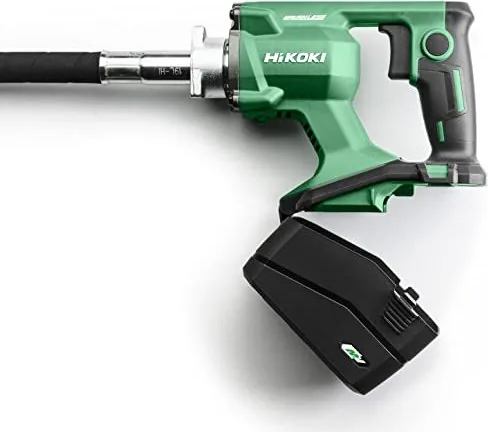
O Vibrador de Betao sem Fio HiKOKI UV3628 foi concebido para uma compactacao eficiente de betao durante trabalhos de fundacoes, betonagens de lajes e producao de componentes de betao. A sua plataforma sem fio de 36 V permite aos utilizadores movimentarem-se livremente na area de trabalho sem gerir um cabo de alimentacao, tornando-o pratico para tarefas de construcao exigentes e locais com acesso limitado a energia.
Concebido para uma Compactacao Controlada de Betao
Este modelo utiliza uma agulha vibratoria de 28 mm com 187 mm de comprimento e um comprimento total de 825 mm. A mangueira flexivel permite uma colocacao controlada no betao fresco, ajudando a remover o ar retido e a promover uma mistura mais uniforme. A area efetiva de compactacao tem aproximadamente 280 mm de diametro, permitindo aos operadores cobrir uma betonagem metodicamente atraves da sobreposicao dos pontos de insercao.
Dois modos de funcionamento oferecem flexibilidade para diferentes condicoes de betao. O modo Normal funciona a 12.000 vibracoes por minuto para compactacao regular e areas onde a cofragem pode ser mais vulneravel a deformacao. O modo Potencia atinge 15.200 vibracoes por minuto e destina-se a betao de maior viscosidade que necessita de uma consolidacao mais intensa.
Desempenho sem Fio e Funcionalidades de Protecao Uteis
O UV3628DA utiliza baterias HiKOKI Multi Volt, incluindo a BSL36A18 e a BSL36B18. A ferramenta gere automaticamente a alimentacao de baterias compativeis de 36 V, enquanto um indicador de bateria ajuda os utilizadores a monitorizar a carga restante. Com 4,2 kg com uma bateria BSL36B18, combina um conjunto vibratorio robusto com funcionamento portatil sem fio.
As funcoes integradas de protecao contra sobrecarga e temperatura ajudam a proteger o motor e a bateria durante trabalhos intensivos. As luzes de aviso no painel do interruptor indicam sobrecarga ou temperatura excessiva, permitindo ao utilizador parar, eliminar a causa do esforco ou deixar a ferramenta arrefecer antes de continuar. Estas funcionalidades permitem uma utilizacao mais fiavel na compactacao de misturas densas ou em trabalho continuo.
Funcionamento e Manutencao Praticos
Para obter os melhores resultados, insira a agulha vibratoria verticalmente, mantenha-a afastada de barras de armadura e cofragem, e retire-a lentamente para evitar deixar buracos. A vibracao excessiva pode separar os ingredientes do betao, pelo que e importante uma colocacao controlada e uniformemente espacada. Ao trabalhar em inclinacoes, comece pela extremidade inferior para utilizar eficazmente o peso das betonagens posteriores.
Apos a utilizacao, remova imediatamente os residuos de betao com um pano bem torcido e uma solucao de sabao suave. Mantenha limpas as areas de ventilacao, os interruptores, os terminais da bateria e o conjunto flexivel. Evite a entrada de agua no corpo da ferramenta, nao dobre nem pise a mangueira flexivel e deixe a agulha vibratoria arrefecer antes de lhe tocar.
Notas
- Utilize apenas baterias HiKOKI Multi Volt genuinas designadas.
- Use protecao para os olhos, rosto e ouvidos durante trabalhos com betao.
- Desligue a ferramenta e aguarde que a vibracao pare antes de a pousar.
Pesquisar por 67.732 Manuais online


Digite a marca ou modelo